Jelly Run 2048
- 4.8
- Rating
- 50.00M
- Installs
- Free
- Price
 Analysis by App-foxy
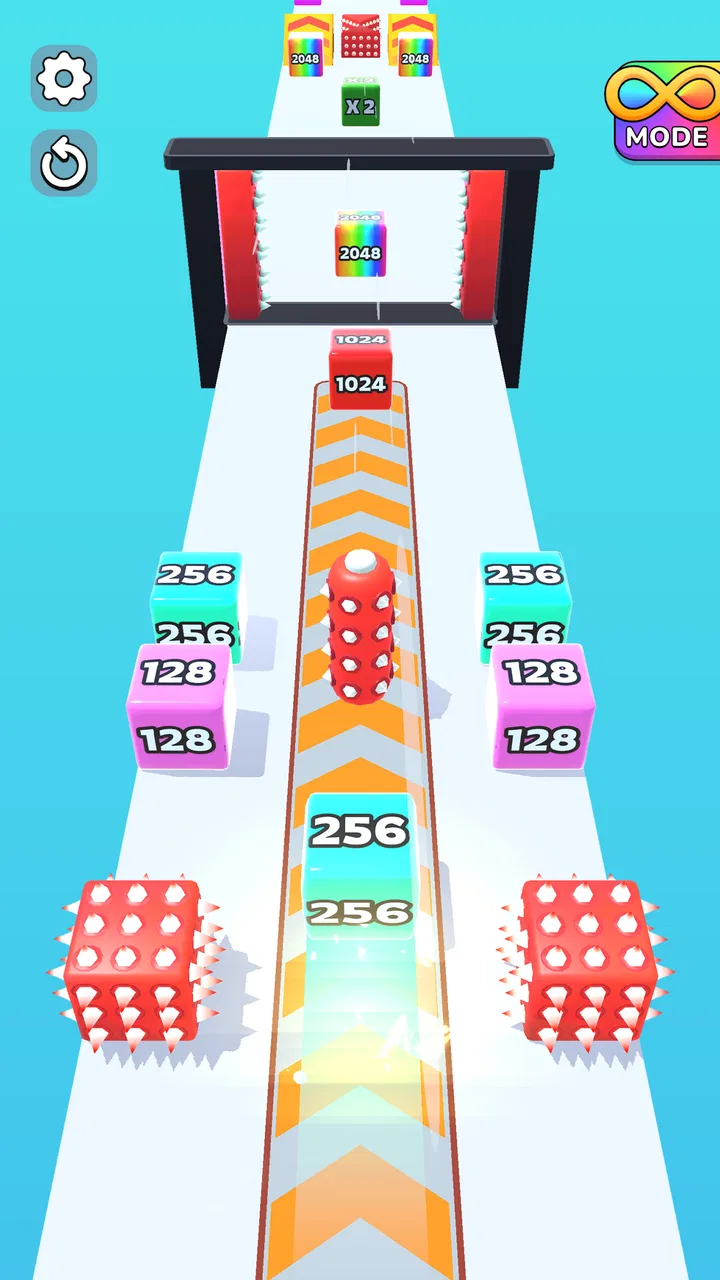
I found Jelly Run 2048 easy to understand within moments, but its simple appearance hides a game that rewards careful timing more than I first expected. It is a casual puzzle game from CASUAL AZUR GAMES where jelly blocks can be merged or split while moving toward the finish. That combination gives it a different feel from a standard 2048 board: instead of calmly planning several moves on a fixed grid, I have to watch the path, judge the shape of the incoming pieces, and decide whether combining them now will help or create a problem later.
That makes it a pleasant choice for short breaks. I can play a level while waiting for an appointment or use a few rounds to reset my attention after work. The game is free to install and is rated for Everyone, so it is broadly approachable. At the same time, the bright visual style, quick decisions, and possible interruptions mean it will not suit every player or every situation. My overall impression is positive, especially for people who want a lightweight puzzle experience rather than a deep strategy game.
How clearly the game communicates its puzzles
I find that the key to reading Jelly Run 2048 well is to treat each choice as a question about what the route will demand next, not just whether two blocks can combine. In this section, I’ll look at how the moving course and the merge-or-split decisions fit together, including the small planning habits that make the puzzles easier to judge. That context also helps explain why the game can feel more demanding than its cheerful presentation suggests.
You May Also Like

 Blood Strike: 2.5 Anniversary
Blood Strike’s Loadouts Turn Every Drop Into a Tactical Gamble
A close look at Blood Strike’s custom loadouts: how fast access to signature weapons reshapes its battle royale rhythm, rewards preparation, and narrows the gap between fights.

 Pandora - Music & Podcasts
Pandora’s Music Is Easy to Start, but Harder to Recover
Pandora’s strength is its low-effort path from a seed to a station. Its weak spot is how much confidence it asks you to place in connection, setup, and quiet recovery.

 8 Ball Pool
 Is Built on Rivalries, Rematches, and Routine
A close look at the rivalries, rematches, shared routines, and unanswered safety questions that turn a quick pool match into a persistent mobile community.

 Samsung Music
’s Quiet Strength Is Playing What You Already Own
Its reach comes less from spectacle than from dependable access to a personal library. That simplicity is both the app’s strongest retention engine and its ceiling.

 AccuWeather: Weather Radar
AccuWeather Review: A Quick, Clear Forecast for Everyday Decisions
For everyday plans, the best forecast is the one you can understand quickly. AccuWeather makes rain timing, radar, and local conditions easy to act on, with a few trade-offs.

 Hill Climb Racing
Why Hill Climb Racing Still Turns Crashes Into One More Run
A tiny car, a bumpy hill and one more upgrade: Hill Climb Racing keeps resurfacing because its simple chaos makes every near-miss feel personal.
More From Our News Desk
View All News


Readable goals and a quick learning curve
The central idea is clear: guide jelly blocks through a course, merge matching values when that helps, split them when a larger block would be awkward, and reach the end. I did not need a long tutorial to understand the basic objective. The 2048 influence is familiar enough that anyone who has played a number-merging puzzle can recognize the logic, while the running format gives each decision a more immediate consequence.
I especially like that the game does not ask me to memorize a complicated control scheme. The challenge comes from reading the pieces and the route, not from learning a large collection of buttons. That matters for younger players and for anyone who prefers games that explain themselves through play. The category label of casual is a good fit: it is approachable, quick to start, and suitable for occasional sessions rather than requiring a fixed daily routine.
The visual presentation also helps establish the game’s personality. Jelly blocks are more inviting than plain numbered tiles, and the movement toward a finish line gives every level a visible sense of progress. However, the playful look can sometimes make the puzzle appear easier than it is. A player may begin by reacting to the most obvious merge, only to discover that the resulting block is too large or badly positioned for the rest of the course.
Why the merge-or-split choice matters
The most useful habit I developed was to stop treating every merge as automatically good. In a traditional 2048 game, creating a larger number is usually the main objective. Here, the shape and position of the block matter just as much as its value. A merge can simplify the board, but it can also remove flexibility. Splitting is not merely a way to undo a mistake; it can preserve room for the next part of the route.
When I play, I first look at the whole visible path instead of tapping immediately. I ask whether the next obstacle seems to favor one large piece or several smaller ones. This small pause makes the game feel more thoughtful and reduces the frustration of making a quick move that seemed sensible but left no useful option afterward. It is a practical tip that is easy to miss if I focus only on the colorful blocks.
Another useful approach is to treat the finish line as part of the puzzle from the beginning. I do not simply try to improve the number on a block and hope the final section works out. I consider what size and arrangement I will need near the end. That forward-looking style is where the game separates itself from a purely reflex-based runner.
Navigation that works best in short sessions
The game’s structure is well suited to casual use because the objective of each attempt is immediately visible. I can open it, understand what needs attention, and begin without preparing a long strategy. This is useful in everyday situations such as riding public transport, waiting for food, or taking a short break between tasks. I would not choose it for a long uninterrupted gaming evening, but I can easily imagine returning to it several times during the day.
Its current version is 1.65.3, and the game supports devices running Android 7.0 or later. That makes it relevant to people using older Android hardware, although the actual comfort of play will still depend on the individual phone’s screen, responsiveness, and display settings. I would check the device experience before assuming that an older handset will feel equally smooth or readable.
The game has a 4.8 average from around 200 thousand ratings, with more than a thousand written reviews, and it has passed 50 million installs. Those figures suggest that the format has reached a wide audience, but they do not replace personal testing. A popular casual game can still be a poor fit for someone who dislikes colorful presentation, repeated level patterns, or decisions that become harder to read when the screen is busy.
Playing with different abilities and in different contexts
I think a game’s accessibility depends not only on its controls but also on where and how someone plays it. Here, a steady view of the moving blocks can matter more than fast hands, while a noisy or distracting setting can make planning harder. I’ll consider the kinds of players and everyday moments that suit this format, then turn to the practical trade-offs that may make another casual puzzle a better fit.
Motor demands are simple, but timing still matters
From a motor perspective, the appeal is its limited control complexity. I am not asked to combine several buttons or perform a long sequence of gestures. The important action is generally a straightforward interaction with the moving pieces, which is less demanding than games built around rapid tapping, virtual joysticks, or precise platforming. For players who find complex controls tiring, that simplicity can make the game more approachable.
There is still a difference between simple controls and effortless controls. The game’s decisions happen while the blocks are progressing, so a player who needs extra time to interpret the screen may feel pressure even if the physical gesture itself is easy. I found that the best way to reduce this pressure was to play in a quiet setting and make a plan before interacting. The game becomes more manageable when I focus on deliberate choices rather than trying to react at the last moment.
For someone with limited reach or one-handed use, the experience may be comfortable if the needed interaction stays within an easy area of the display. I would not describe that as a guarantee for every device or player, because phone sizes and hand positions vary. Still, compared with a game requiring constant movement across several on-screen controls, this one has a relatively modest physical burden.
Visual and sensory considerations
The jelly theme gives the blocks a friendly identity, but it also creates a visually lively screen. Bright colors, movement, and changing block arrangements can be enjoyable for many players while becoming distracting for others. I found the game easiest to read when I reduced surrounding distractions and played with the screen at a comfortable brightness. A crowded environment made it harder to distinguish the important piece from the decorative energy of the scene.
Players who rely heavily on color differences should pay attention to how well the blocks stand apart on their particular display. I would not assume that every color combination will be equally clear for every person. Looking at screenshots or trying the free version on the intended device is sensible before committing to longer play sessions. The numbers and shapes contribute to recognition, but the overall clarity can still depend on contrast, screen quality, and personal eyesight.
Sound and motion can also affect comfort, particularly for people who are sensitive to busy visual feedback or prefer quiet games. I tend to play casual puzzles with other media turned down, because the decisions are easier to follow when the game is not competing with music, conversation, or notifications. In a shared room, this makes the experience more considerate and less intrusive.
When the game fits real life
A realistic use case is a short waiting period where I want something more engaging than scrolling but less demanding than a full adventure game. I can begin a round, make a few decisions, and stop without needing to remember a complicated story or a large inventory. That makes it a good companion for small gaps in the day, especially for players who enjoy puzzles but do not want to spend time learning a new world.
It is less suitable when I am walking, crossing a street, supervising a child, or doing anything that requires continuous attention elsewhere. The game may look harmless because it is casual, but the route and block choices still deserve concentration. I would also avoid playing during a conversation or a work task if I know I am likely to keep thinking about the next move.
For families, the Everyone rating makes the game broadly appropriate in age terms. That does not mean every child will find it equally easy. Younger players may understand merging quickly but need help with the idea that splitting can sometimes be the better decision. I see that as a useful learning opportunity: the game can encourage planning, patience, and the ability to reconsider an obvious move.
Where it sits beside other casual puzzle games
Compared with the classic 2048 format, this game feels more active because the blocks are connected to a route and a finish. The usual grid version is better for players who want unlimited time to calculate combinations and arrange a board carefully. Jelly Run 2048 is better for someone who enjoys that number logic but wants each decision placed inside a moving, visually guided challenge.
Compared with endless runners, it is more deliberate and less dependent on reflexes. A typical runner may ask me to dodge obstacles continuously, while this game asks me to solve the block situation before the path becomes unusable. Players seeking speed, character progression, or a large narrative will probably find a different genre more rewarding. Players who want a compact puzzle with a playful presentation may prefer this hybrid approach.
It also differs from more elaborate puzzle games that build around hundreds of mechanics, equipment systems, or long campaigns. The advantage is that I can understand the basic appeal quickly. The trade-off is that the experience may feel repetitive to people who need constant novelty. Its strength is focus, not breadth.
Practical friction to consider
The game is free, which removes the main barrier to trying it. It does include in-app purchases ranging from $0.99 to $26.99 per item, so I would be careful when handing the device to a child or when using a shared payment account. A free entry point is welcome, but optional purchases can change how comfortable the experience feels for families that want a strictly no-spend game.
I also think players should approach it with realistic expectations about depth. The merge-and-split idea provides more decision-making than the short store summary suggests, but it is still designed as a casual game. Someone looking for a complex competitive puzzle system, extensive customization, or a long-form campaign should probably choose a more specialized alternative.
Another limitation is the dependence on visual interpretation. If the screen is small, glare is strong, or the player is tired, the distinction between a useful move and a risky one becomes harder to judge. This is not a reason to reject the game outright, but it does mean that device comfort matters. I had a better experience when I played seated, with the phone held steadily and enough time to inspect the route.
My inclusive verdict
I recommend Jelly Run 2048 to people who want an approachable casual puzzle that combines familiar number logic with a more active path-based format. Its controls are comparatively simple, its objective is easy to grasp, and its merge-versus-split decisions give short sessions enough substance to feel worthwhile. CASUAL AZUR GAMES has kept the entry barrier low, while still leaving room for players to improve by thinking ahead.
Its accessibility in everyday use is strongest when the player has a clear view of the screen, a stable grip, and a few uninterrupted minutes. It is less convincing for anyone who needs very slow decision-making, dislikes bright movement, depends on perfect color separation, or wants a deep strategy experience. Those are important boundaries, and I would rather state them clearly than present the game as suitable for everyone simply because its age rating is Everyone.
For me, the best reason to keep it installed is the balance between instant play and small strategic surprises. I can make one quick round feel casual, then notice that better results come from preserving options instead of merging automatically. That gives the game a modest but genuine learning curve. If you enjoy 2048 but want the pieces to feel like they are traveling through a puzzle course, this free game is worth trying. If you prefer calm, static boards or fully predictable controls, the traditional alternative will likely serve you better.
FAQs for Jelly Run 2048
01What is Jelly Run 2048?
Jelly Run 2048 is a dynamic and addictive mobile game that combines elements of endless runner and puzzle genres. Players guide a jelly blob through vibrant environments, merging with other blobs to reach the 2048 tile. The game offers engaging challenges, colorful graphics, and intuitive controls, making it appealing for both casual and avid gamers.
02How do I control the jelly blob in Jelly Run 2048?
Controlling the jelly blob in Jelly Run 2048 is simple and intuitive. Players swipe left or right on their screens to move the blob across the path. The goal is to merge with other blobs to increase the number and avoid obstacles. The game’s responsive controls ensure a smooth and enjoyable experience.
03Is Jelly Run 2048 suitable for all ages?
Yes, Jelly Run 2048 is designed to be family-friendly and suitable for all ages. Its simple mechanics, bright graphics, and lack of inappropriate content make it an excellent choice for children and adults alike. While the game offers strategic challenges, it remains accessible and enjoyable for a wide audience.
04Does Jelly Run 2048 require an internet connection to play?
Jelly Run 2048 can be enjoyed offline, allowing players to dive into the fun without needing an internet connection. However, certain features like leaderboards or in-app purchases may require connectivity. This makes it perfect for playing on the go, whether you're commuting or in areas with limited internet access.
05Are there any in-app purchases in Jelly Run 2048?
Yes, Jelly Run 2048 includes optional in-app purchases. Players can buy items such as skins, power-ups, and other enhancements to improve their gaming experience. While these purchases can offer advantages, they are not necessary to enjoy or progress in the game, maintaining a fair balance for all players.
Pros
- Addictive gameplay keeps you engaged.
- Vibrant graphics enhance visual appeal.
- Simple controls are easy to master.
- Quick sessions fit busy schedules.
- Frequent updates with new challenges.
Cons
- Repetitive levels can become monotonous.
- Occasional ads disrupt the flow.
- Limited power-ups reduce excitement.
- Requires constant internet connection.
- In-app purchases are quite pricey.

Jelly Run 2048
Gallery